 Digitoria
WhatsApp
Blog / DIGITORIA JOURNAL
First-Party Data for small Business: Build a Customer List with Consent
First-party data for small businesses means information customers choose to share directly...
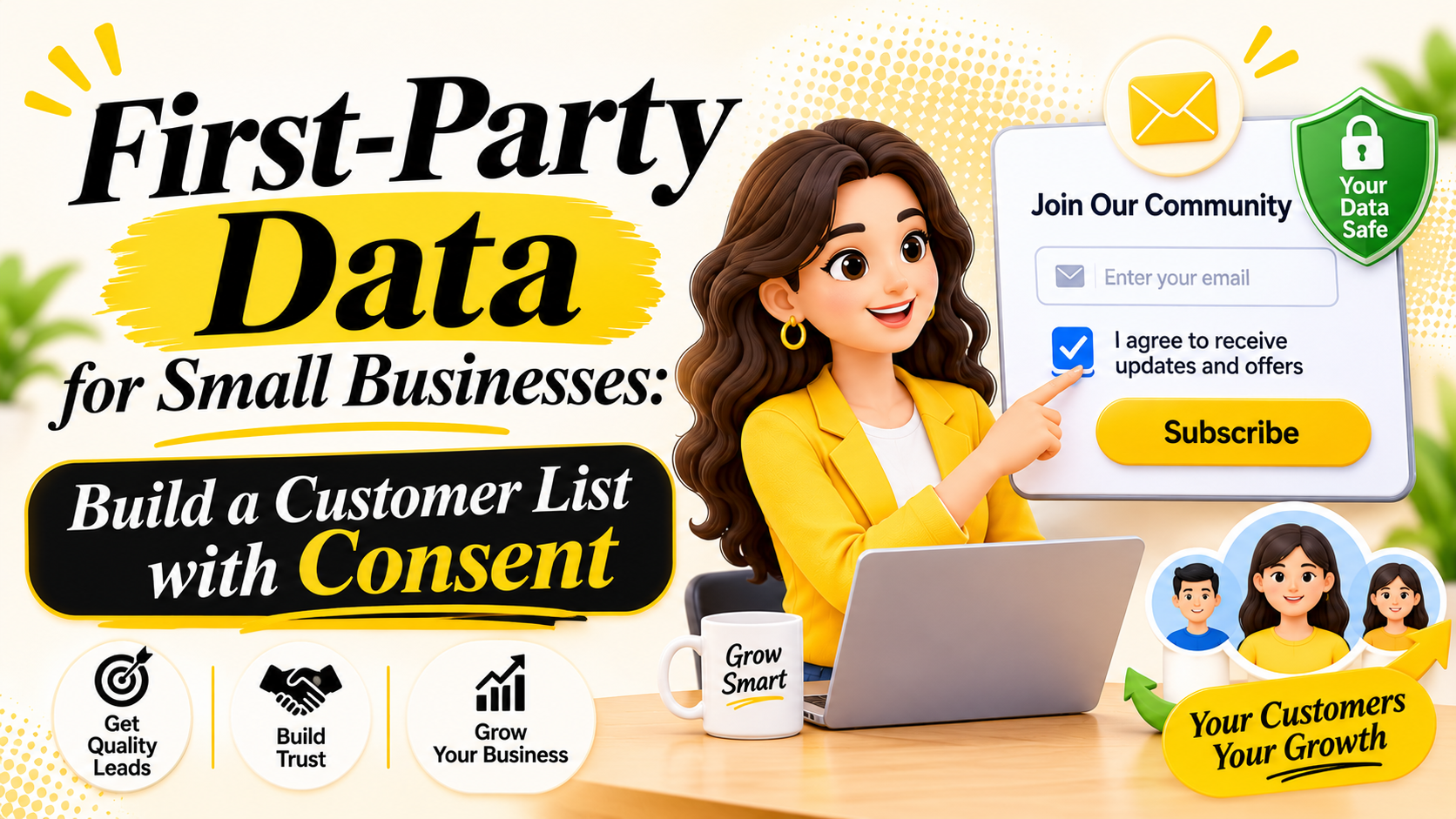
First-party data for small businesses means information customers choose to share directly with your company, such as an email address, product preference or service enquiry. A thoughtful customer list can help you send useful updates and make follow-up more relevant. It works best when people understand what they are signing up for, can change their preferences and can leave easily.
Why First-Party Data for Small Businesses Starts with a Clear Purpose
Before collecting anything, decide what the list should help customers do. A neighbourhood bakery might send a weekly menu; a repair company might share maintenance reminders; a consultant might offer a monthly practical guide. One clear promise is easier to explain than a vague offer to “get updates.” Write down who will receive the messages, how often you expect to send them and what kind of information they will contain.
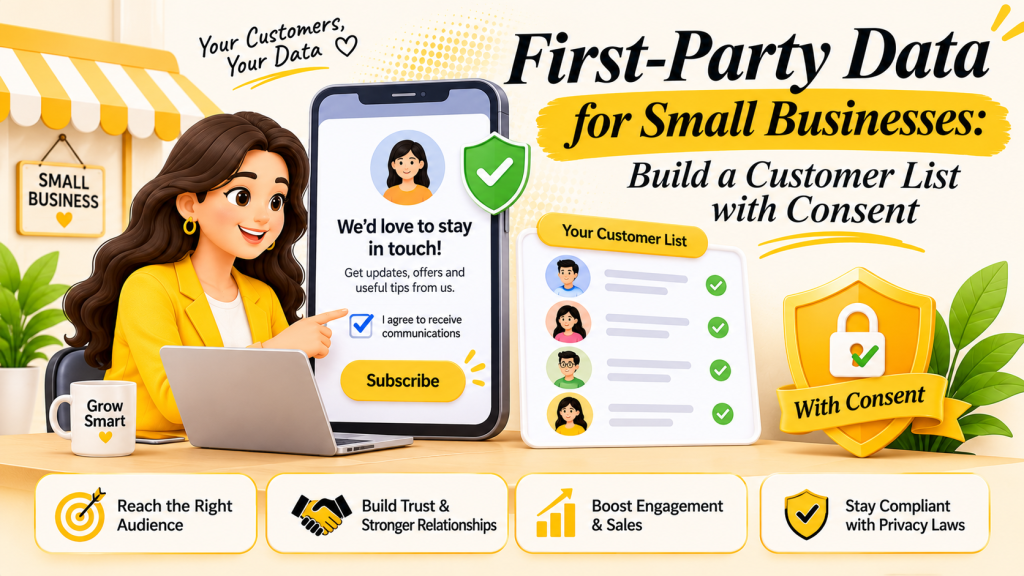
Ask Only for What You Need
A short sign-up form usually has less friction than a long questionnaire. An email address may be enough to deliver a newsletter. Ask for a name or preference only when it changes the message in a meaningful way. Good first-party data for small businesses is small, relevant and easy to explain. Do not collect sensitive details just because a form builder makes it possible. Keep enquiry information separate from marketing subscriptions unless the person has clearly agreed to both uses.
Make Consent Specific and Visible
Tell people what they are agreeing to before they submit the form. Use plain language beside the sign-up action, identify your business, describe the message type and frequency, and link to your privacy notice. Do not pre-select a marketing checkbox or make a purchase depend on joining a promotional list. Where local rules require particular wording or records, confirm the requirements for your location and get qualified advice when needed. In India, you can start with the official guidance on the MeitY data protection framework.
Give Subscribers Useful Control
A reliable customer list is built through ongoing trust. Include a working unsubscribe option in marketing emails, honour requests promptly and provide a way to update preferences. Store the date, source and wording of each opt-in where your email platform supports it. Limit account access to staff who need it, use strong passwords and remove records that no longer serve a legitimate purpose under your retention policy.
Send Messages People Expect
Set the first email immediately after signup. Thank the subscriber, repeat what they asked to receive and set expectations for future messages. Then plan a simple schedule you can maintain. A monthly note with a helpful answer or timely update is better than a burst of messages followed by silence. Keep the subject line honest, make the next step clear and ensure the email is readable on a phone.
Use Preferences with Care
If subscribers choose topics, use those choices to make content more relevant, not to infer sensitive traits. For example, a home services company could let readers select seasonal maintenance tips or renovation updates. Review each segment periodically and avoid sending the same promotion to everyone when the information is not useful to them. Suppress addresses that bounce repeatedly and investigate complaints rather than continuing to send. Handled carefully, first-party data for small businesses improves relevance without crossing the line into guesswork.
Measure Value Without Chasing Vanity Metrics
Track delivery, clicks, replies, bookings and unsubscribes alongside list growth. Compare results with the purpose of the email: a service reminder may be valuable when it reduces missed appointments, even if it has few clicks. Use consistent links and a simple campaign log so you can tell which message generated an enquiry. Avoid treating every open as reliable evidence, since privacy features can affect email reporting.
A Simple First-Month Plan for First-Party Data for Small Businesses
Choose one audience and one message promise. Update the sign-up form and privacy wording, test the confirmation and unsubscribe journeys, then invite customers through your existing website or service interactions. Send one useful email, review the response and adjust the next edition. Keep a record of the change so your team understands why it was made.
First-party data for small businesses is not a shortcut to more messages; it is a direct relationship people have chosen to start. Be clear about the value, collect the minimum information needed and respect each subscriber’s choices. A small, permission-based list built on first-party data for small businesses is a stronger foundation for long-term marketing than a large list people do not remember joining.
For help building a website with clear sign-up forms, explore Digitoria’s web development services.
Common First-Party Data Mistakes Small Businesses Should Avoid
Most problems with first-party data for small businesses come from rushing. Avoid buying email lists, adding customers to a newsletter without clear permission, or asking for details you will never use. A long form with many optional fields can reduce sign-ups, while a vague promise such as “stay in touch” makes it hard for people to know what they agreed to.
Another common mistake is collecting data and never using it. If a customer shares a preference, reflect it in the next message. If someone unsubscribes, remove them promptly. Keeping your records tidy protects trust and makes your marketing more relevant.
Start small, keep your sign-up promise clear and review your first-party data for small businesses every few months so the list stays useful and trustworthy.
Frequently Asked Questions About First-Party Data for Small Businesses
What counts as first-party data? It is information customers give you directly, such as an email address, a phone number for appointment reminders, a product preference or a form enquiry.
Do I need a special tool to start? No. A simple sign-up form, a clear privacy notice and a basic email platform are enough for most small businesses. You can add more tools as your list grows.
How often should I email my list? Choose a schedule you can maintain, such as once a month, and tell subscribers what to expect when they sign up. Consistency matters more than volume.
.